
You've trained for months. You've done the early alarms, the long runs, the Sunday mornings that start before the sun is up. Then race day shows up and your legs feel like cement, or your stomach has other plans.
Here's what I see over and over: runners who nailed their training and then got the carb load wrong.
I know, because I did it too. Before my early marathons, I carb loaded with a giant bowl of spaghetti the night before and called it a fueling strategy. Then I wondered why race day felt so rough.
After 12 marathons, 2 Boston Qualifiers, and more than a few ultras, here's what I know: how to carb load for a marathon is less about eating more and more about eating smarter, over more than one meal. This is the plan I use myself and the one I teach my clients.
Why the night-before pasta dinner lets you down
The classic advice is to eat a huge pasta dinner the night before. The problem is that it's one big, last-minute meal, and it's usually loaded with fat and fiber: cream sauce, cheese, garlic bread, a big salad, maybe whole wheat pasta.
Fat and fiber slow digestion down. That's great on a regular Tuesday. It's not great when you're about to run 42.2 km.
The result?
Sluggish legs
Bloating and digestive distress
GI panic mid-race
Carb loading works when you build up your glycogen stores (your fuel) gradually, over a few days, with foods your stomach can handle. Think of it as a taper for your digestion.

How to carb load for a marathon: the 3-day plan
Start 2-3 days before your goal race. The same approach works before long runs of 20 km or more, which makes those runs the perfect time to practice.
The goal is to gradually fill your fuel stores while slowly bringing fat and fiber down. Not to cram everything into one big dinner.
3 days out: start increasing your carbs mindfully
Add extra carbs to the meals you already eat. Extra rice with dinner, oats at breakfast, a banana with your snack, toast or potatoes on the side, a glass of juice. Nothing fancy, and nothing new.
2 days out: keep it simple and easy to digest
Shift toward simple, digestible carbs and start lowering the fiber. This is when you ease off beans, lentils, and cruciferous veggies like broccoli, kale, cabbage and salads.
1 day out: low fiber, high carb
Go low-fiber and high-carb. Skip raw veggies, seeds, and fatty meats. Sip fluids all day so you're well hydrated, instead of chugging a liter at the end.
Most runners think carb loading means a bigger dinner. It really means more carbs across the whole day, in easy meals and snacks.

What to eat more of when you carb load
Reach for easy-to-digest carbs:
White rice, sourdough toast, and soft cooked oats
Ripe bananas, canned peaches, and applesauce
Mashed potatoes and peeled sweet potatoes
Rice cakes, plain bagels, and pretzels
Maple syrup, honey, and electrolyte drinks for easy extra carbs that don't fill you up
Yes, white rice and plain bagels. For race week, boring wins.
Gluten-free? Rice, potatoes, gluten-free oats, rice cakes, bananas, and maple syrup all work just as well.
What to limit before race day
Fiber is great most of the year. Race week is the exception. Cut back on:
Cruciferous veggies (broccoli, kale, cabbage)
Raw veggies, salad, beans, lentils, and seeds
Fried, creamy, or high-fat sauces
Red meat
Fiber-heavy grains like quinoa and whole wheat pasta
Save those for your post-race meals. You'll have worked so hard and will need to replenish with them.
Carb loading when you work a full-time job
Most of the runners I work with aren't elite athletes with a whole day to rest and plan out all their meals. You're answering emails on Thursday, sitting through meetings on Friday, and trying to carb load around a packed calendar.
A few things that help:
Pack your carbs. Keep a stash at your desk: bagels, bananas, rice cakes, pretzels. Grabbing the easy thing beats hunting for something less optimal at 3pm.
Plan the menu for work lunches and dinners. Choose rice, potatoes, or plain pasta with a tomato-based sauce over creamy or fried options.
Keep a water bottle with electrolytes at your desk and sip all day.
Travelling for the race? Pack your go-to snacks and breakfast foods. Hotel and airport options are rarely low in fat and fiber.
Nothing new. Race week is not the time to try a new gel, a new restaurant, or a new superfood.
I leaned on this myself at a very challenging 50km mountain ultra. I was travelling for the race, and I still stuck to a solid carb load and race day fuel plan that got me across the finish line.
On the long drive to the race, I made sure to have lots of snacks and juice to both hydrate and carb load as we made the 8 hour drive. We also stopped several times, to fuel and since I knew gas stations might not have the best carb load options for a gluten free runner, I packed snacks, like potato salad, sweet potato fries, miso soup and candy to add to the fun of a road trip!
Train your tummy before race day
Here's the part most runners skip: you have to practice this.
You wouldn't run a marathon without training, and you shouldn't suddenly bump your carbs from 300 g to 500 g in a day without upsetting your system. Carb guidelines for athletes have gone up in recent years, which is good news, but your gut needs time to catch up.
Use your long runs to test your race-week meals and your race-day fuel. Increase carbs a little at a time during training, not for the first time on race weekend.
[Link to related blog post: your long run fueling or race-day fueling post]
4 carb loading mistakes I see most
Waiting until the night before. One huge meal is not a carb load.
Loading up on healthy fat and fiber. The big salad and the whole grain pasta are great in training. Not the night before a marathon.
Trying something new. If you haven't eaten it on a long run, don't eat it in race week.
Forgetting fluids. Carbs need water. Sip all day, and use electrolytes.
If you want this built around your own training schedule, your gut, and your goal race, that's exactly what we do inside [Fuelled to Finish: link to your program page].
Bringing it all together
Carb loading for a marathon isn't a big pasta dinner. It's at least a 3-day build: more easy carbs, less fat and fiber, plenty of fluids, and nothing new.
Get that right and you give yourself the best shot at showing up to the start line feeling light, energized, and confident.
Want the exact day-by-day plan, with meal ideas? Grab my free guide.
Get the free Race Day Ready Fuel guide: the 3-day carb load plan that won't leave you running for the bathroom.
Want a fueling plan that’s as personalized as your training plan?
Inside my Endurance Essentials Program, I’ll show you exactly how to fuel for marathon training, prevent underfueling, and run your strongest race yet.
Like this post and want to read more? Check out my other resources:
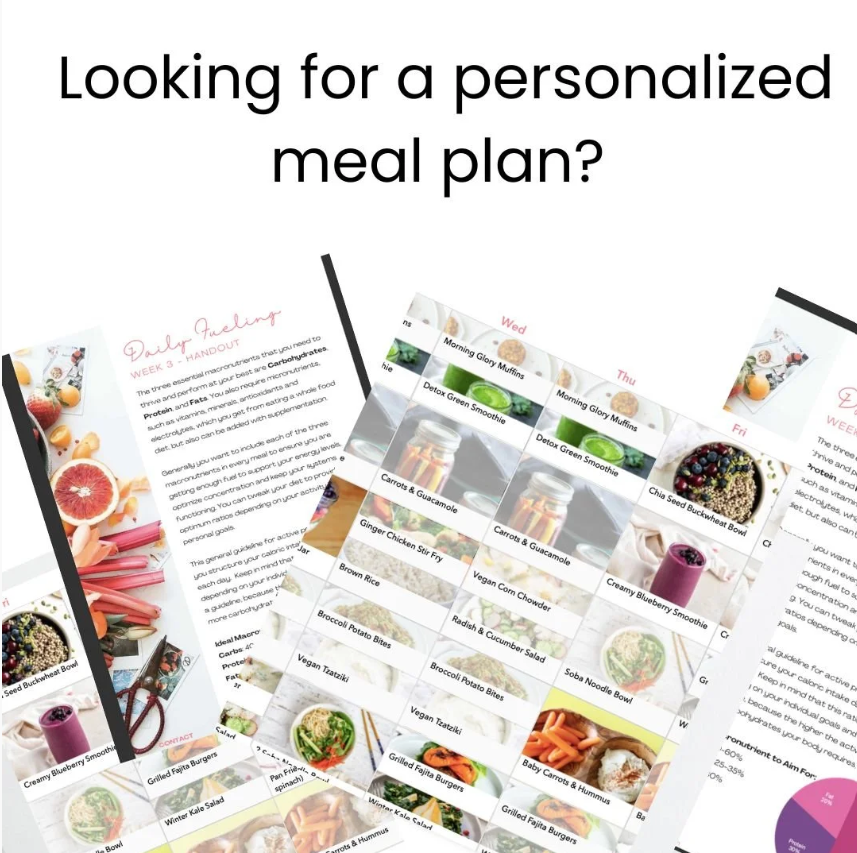
Just ask!
I love helping clients develop meal plans that pack all the nutrients that they need into meal plans and recipe books!